 Interiors
Inspiring homes since 1825
Interiors
Inspiring homes since 1825
Interiors
Inspiring homes since 1825
Interiors
Inspiring homes since 1825
 Karley Robbins
Marketing Manager
Karley Robbins
Marketing Manager
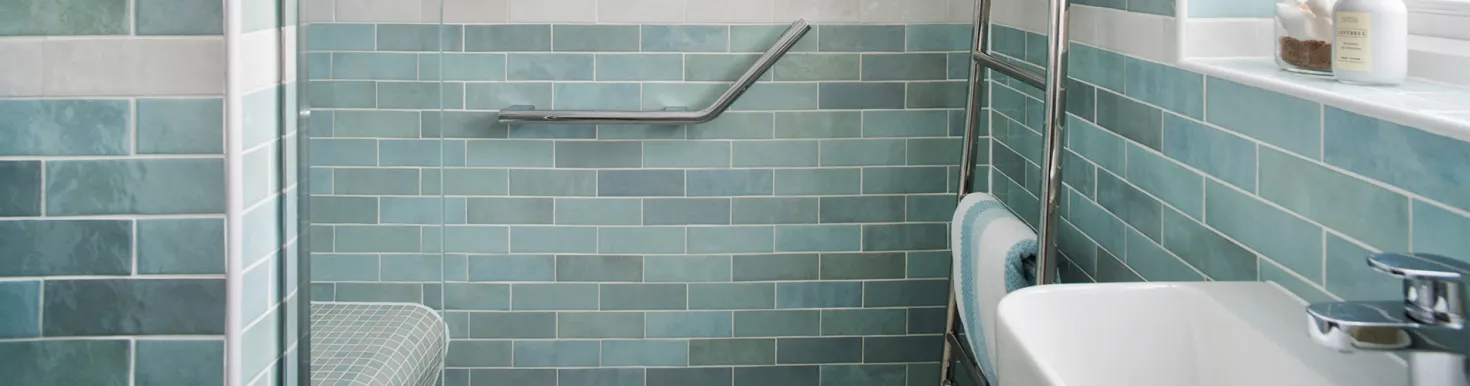
Designing a bathroom that supports accessibility or limited mobility is about far more than meeting physical requirements. A well-planned accessible bathroom should feel comfortable, intuitive to use and just as importantly look like a modern, welcoming space.
Our bathroom designers work closely with customers to create bespoke bathrooms that reflect how they live, move and use their space. Whether you’re planning for reduced mobility, future-proofing your home, or adapting a bathroom for comfort and safety, thoughtful design makes all the difference.
Every accessible bathroom is different, because every person’s needs are different.
For many people with limited mobility, ease of reach is essential.
Toilets, basins, storage and controls can be positioned at heights that feel comfortable and natural to use, reducing strain and improving independence. Wall-hung units and floating basins can also help create clear floor space while maintaining a clean, modern look.
Showers are often the preferred option for accessible bathrooms, offering convenience, safety and ease of entry.
Popular solutions include:
Modern shower seating is a far cry from older clinical designs - today’s options are discreet, streamlined and available in finishes that blend seamlessly with contemporary bathrooms.
For those who prefer bathing over showering, walk-in baths offer a comfortable and accessible alternative. Designed with a side-opening door, low step-in access and integrated seating, they allow users to bathe safely without the need to step over a high bath edge. Modern walk-in baths are available in a variety of contemporary styles and finishes, often incorporating features such as slip-resistant surfaces, easy-to-reach controls and optional grab rails that blend seamlessly into the design. For many people with reduced mobility or balance concerns, a walk-in bath provides the relaxation of a traditional soak with added confidence, comfort and independence.
Clear floor space is a priority for accessibility, but that doesn’t mean compromising on design.
Slimline furniture, wall-mounted storage and careful layout planning help create:
Good design ensures everything is within easy reach without the room feeling sparse or unfinished.
One of the biggest changes in accessible bathroom design is how good it now looks.
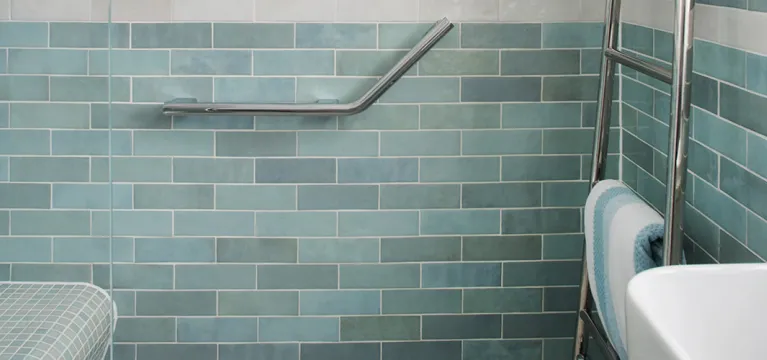
Grab rails are no longer limited to bulky, hospital-style fittings. Modern designs include:
These can be placed exactly where needed while complementing the overall bathroom design.
User-Friendly Taps and Controls
Accessibility often comes down to small details:
These features benefit not only people with limited mobility but also multi-generational households.
Accessible bathrooms aren’t only for wheelchair users. Many customers plan with:
Designing with accessibility built in from the start allows your bathroom to adapt with you without looking like an adaptation.
A well-designed accessible bathroom should feel safe, comfortable and personal, not medical or institutional. With today’s materials, finishes and clever layouts, accessibility and great design go hand in hand.
Our bathroom designers focus on listening first, then creating a space that supports independence, comfort and style in equal measure.
Bathroom renovations can be both exciting and challenging. One of the most common hurdles homeowners face is making the most of limited space. Whet...
Gardiner and Sons Co Ltd registered address Gardiner Haskins, 1 Straight Street, Broad Plain, Bristol, BS2 0FQ, registered in England.
Company registration number: 00039402 VAT no. GB302974367